10 Best Good Quality Dog Toys for Wholesale Buyers?
Wholesale buyers need more than attractive packaging when choosing Good Quality Dog Toys. They need products that survive real play, transport, storage, and repeated customer use. A rubber ball may look durable under bright showroom lights, yet split after one energetic Labrador carries it across concrete. A plush toy may sell quickly, but loose stitching can create returns and serious safety concerns. These details matter.
Dr. Roger Mugford, a canine behavior expert and founder of Company of Animals, has said, “The dog is not a toy.” This short warning deserves attention. A dog toy must support natural behaviors, including chewing, chasing, tugging, sniffing, and problem-solving. Good Quality Dog Toys should use suitable materials, secure seams, reliable fasteners, and carefully considered sizes. They should also offer clear age, breed, and supervision guidance.
This guide examines ten practical choices for wholesale buyers. It considers durability, safety design, cleaning, packaging, price stability, and retail appeal. It also looks at whether each toy serves a genuine canine need, rather than merely adding color to a shelf. Some products will perform better than expected. Others may disappoint after extended use. That is an uncomfortable possibility, but honest evaluation protects buyers and dogs.
No toy is indestructible. A careful buyer remembers that point. Testing should include pressure, moisture, repeated chewing, and realistic handling. Supplier documentation helps, but physical inspection remains essential. In this market, trust is built through evidence, not attractive promises.
Understanding Quality Standards for Wholesale Dog Toys
10 Best Good Quality Dog Toys for Wholesale Buyers
Understanding Quality Standards for Wholesale Dog Toys
Quality is not a popularity contest when selecting wholesale dog toys. A reliable toy should match a dog’s size, chewing strength, and play style. Inspect the material closely. Food-contact-grade rubber, tightly woven fabric, and securely stitched seams offer useful starting points. Strong odors, loose threads, sharp edges, or weak plastic deserve rejection. Small parts can become dangerous when detached.
A practical inspection should include sample testing from different production batches. Pull rope knots, flex rubber pieces, and examine plush stitching after repeated handling. Test toys while dry and slightly damp. Some materials weaken after washing. Check whether squeakers, eyes, labels, or filling can escape through damaged seams. No toy is indestructible. Clear durability limits help buyers set honest expectations.
Wholesale packaging also reflects quality control. Each carton should identify the product code, size, material, care instructions, and recommended dog weight. Keep supplier test records, inspection photos, and batch information together. These details support traceability and reduce avoidable disputes. Requirements vary between destination markets, so verify applicable safety rules before ordering. A lower price may look attractive, but inconsistent samples create hidden costs. I would rather remove one questionable design than accept a full shipment that needs excuses.
Key Features of Safe and Durable Dog Toys
10 Best Good Quality Dog Toys for Wholesale Buyers?
Key Features of Safe and Durable Dog Toys
Safe construction starts with the dog, not the package. APPA’s 2023–2024 National Pet Owners Survey reported 65.1 million U.S. households owned dogs. That scale makes quality control essential. Wholesale buyers should inspect material consistency, rounded edges, secure seams, and accurate size labels. A toy should not shed loose threads, sharp fragments, or small detachable parts during normal play. Small details matter.
Durability needs practical testing. Press molded rubber for weak spots. Pull stitched areas by hand. Check whether squeakers remain enclosed after repeated compression. Use washable materials that resist odor and cracking. The ASTM F963 toy standard is designed for children, not pets, so buyers should not treat it as complete pet-toy certification. Product-specific testing and documented factory inspections remain necessary. No toy is indestructible.
The American Pet Products Association valued U.S. pet industry spending at $147 billion in 2023. This shows strong demand, but sales data cannot prove safety. That is an important limitation. Buyers should request batch records, material declarations, test reports, and sample approval before placing large orders. I would also test toys with different jaw strengths and chewing styles. One failed sample can reveal a larger design problem. Oversized toys may frustrate small dogs, while undersized toys can create swallowing risks. Clear testing criteria make safer wholesale decisions.
This chart compares ten common dog-toy categories using an eight-point wholesale quality checklist: non-toxic materials, secure construction, chew resistance, size suitability, washable surfaces, visibility, enrichment value, and packaging information. Higher scores indicate stronger coverage of key safety and durability requirements for wholesale evaluation.
Top 10 Dog Toy Categories for Wholesale Purchasing
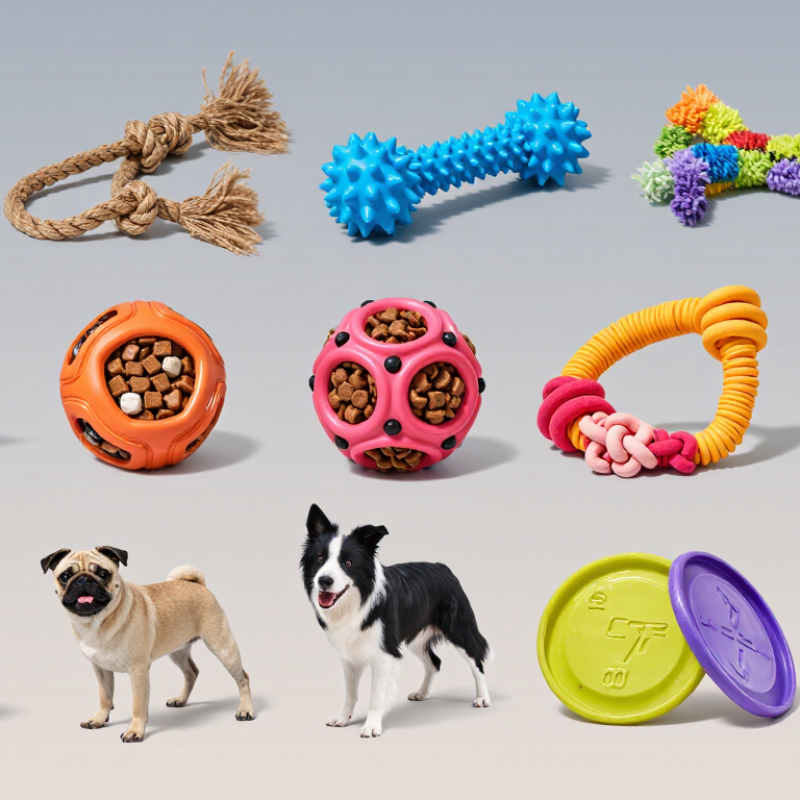
Wholesale buyers need more than attractive colors and low prices. A useful assortment covers ten dog toy categories: rubber chew toys, plush toys, rope toys, tug toys, fetch balls, squeaky toys, treat-dispensing toys, puzzle toys, dental toys, and cooling toys. Each category serves a different play habit, size range, or seasonal demand.
From practical purchasing work, I recommend checking material consistency, stitching, seams, odor, and packaging before placing large orders. Chew toys should match the dog’s size and chewing strength. Plush and squeaky toys need secure seams and protected sound units. Rope toys should resist early fraying. Puzzle and treat-dispensing toys should offer clear difficulty levels. Cooling toys need reliable sealing and simple care instructions. Small samples reveal problems that product photos hide.
Wholesale quality also includes documentation. Ask for material details, safety test records, batch information, and realistic usage guidance. Do not rely on vague claims such as “indestructible.” No toy survives every dog. I once underestimated the demand for simple fetch balls because interactive products looked more profitable. The result was slower stock movement. A balanced mix is safer, but it still needs local sales data. Review returns, customer comments, packaging damage, and repeat orders every season. Some categories may need replacement earlier than expected.
Choosing the Best Dog Toys for Different Pet Markets
10 Best Good Quality Dog Toys for Wholesale Buyers: Choosing the Best Dog Toys for Different Pet Markets
A practical wholesale selection begins with the pet market, not the product photo. Urban owners often need quiet toys for apartments, such as soft puzzles and low-noise balls. Families with puppies usually prefer chew toys with clear size guidance and washable surfaces. For active outdoor customers, floating fetch toys and textured retrieval rings may sell better. Small details matter. I inspect seams, odor, edge finishing, and material flexibility before approving a sample.
Different dog sizes also require different product decisions. Small dogs need lightweight toys that fit comfortably in their mouths. Large breeds need stronger construction, thicker walls, and secure handles. Senior dogs may prefer gentle textures and simple treat puzzles. Grooming salons and daycare centers often value easy-clean toys with bright colors and quick visual inspection. Wholesale buyers should request material information, durability testing, and care instructions from suppliers. Regional safety requirements must also be checked before import or resale.
Price affects every market, but low cost should not mean weak quality. A balanced range can include entry-level plush toys, mid-priced interactive products, and premium durable designs. I recommend testing samples with dogs of different sizes before placing a large order. Test before scaling. In one review, a toy looked sturdy but became difficult to clean around its inner seam. That mistake happens. Product feedback, return rates, and repeat orders can reveal more than attractive packaging. Some assumptions will need revision as customer habits change.