
You have no items in your shopping cart.

What Are the 2026 Top Home Gymnasium Equipment Trends? This question now reaches beyond treadmills and adjustable dumbbells. Home training is becoming more connected, compact, and measurable. However, convenience does not automatically create consistency.
The ACSM Worldwide Survey of Fitness Trends for 2025 ranked wearable technology first, mobile exercise applications second, and traditional strength training fifth. These findings suggest a practical 2026 direction: equipment may increasingly connect heart-rate data, workout history, and coaching platforms. Walter R. Thompson, Ph.D., former lead author of the ACSM survey, said, “Wearable technology has been the number one trend for the past five years.” His observation supports the growth of smart resistance machines, connected bikes, recovery devices, and sensor-based training tools inside the Home Gymnasium.
The Global Wellness Institute valued the global wellness economy at $6.3 trillion in 2023 and projected it could reach $9 trillion by 2028. That broader expansion may encourage households to invest in durable, space-saving equipment. Foldable racks, modular cable systems, quiet rowing machines, and adjustable weights could become more attractive than oversized machines. Yet the forecast is not perfect. A connected mirror can still gather dust. A premium machine cannot correct poor movement habits without suitable instruction. Buyers should examine warranty coverage, data privacy, repair access, noise levels, and verified performance claims. The strongest 2026 trend may not be technology alone. It may be equipment that fits real rooms, real budgets, and imperfect routines.
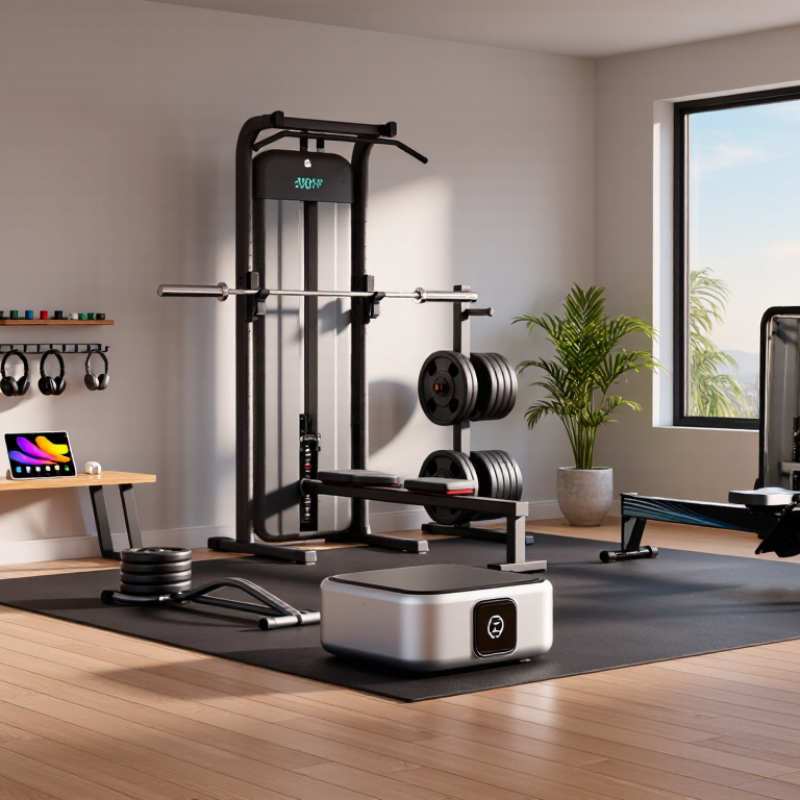
What Are the 2026 Top Home Gymnasium Equipment Trends?
Home gym equipment is shifting from bulky collections to efficient, measured training spaces. The Fortune Business Insights Home Fitness Equipment Market report valued the sector at about $11.6 billion in 2024. It projects continued growth through 2032, although forecasts vary by research method. That difference deserves attention.
Space-saving strength equipment will remain important in 2026. Adjustable dumbbells, foldable benches, resistance systems, and compact racks fit bedrooms and small apartments. Strength training also supports a wider age range than many older fitness trends. The American College of Sports Medicine ranked traditional strength training among its leading global fitness trends for 2025. In practical use, a quiet adjustable bench can replace several large machines.
Connected equipment is becoming more selective. Users want clear progress records, guided sessions, and recovery feedback. They do not necessarily want another complicated screen. ACSM’s 2025 Worldwide Survey placed wearable technology and mobile exercise applications among the strongest trends. Still, technology can create friction. A delayed app, inaccurate sensor, or confusing subscription may interrupt a simple workout.
Low-impact training will also shape purchasing decisions. Indoor cycling, walking platforms, mobility tools, and controlled resistance systems suit users managing joint stress or returning after inactivity. Sustainability is entering the conversation through repairable parts, lower energy use, and longer equipment life. Yet this shift remains uneven. Many products still prioritize fast replacement over durable construction, so buyers should inspect warranties, materials, noise levels, and maintenance access before choosing.
Connected home gyms are moving beyond screens, timers, and basic resistance tools. In ACSM’s Worldwide Survey of Fitness Trends 2025, wearable technology ranked first, while mobile exercise applications ranked second. The signal is clear. Home training is becoming more measurable and responsive. A modern setup may pair a smart resistance unit with a wrist sensor, camera, and adaptive workout platform. The system can adjust load, rest time, and exercise difficulty after each set. McKinsey’s 2024 Future of Wellness report valued the global wellness market at approximately $1.8 trillion, with consumers showing strong interest in personalized solutions.
In practical use, AI guidance works best when it explains each adjustment. A quiet voice might reduce the next set after detecting slower movement. It can also flag a rounded back during a squat. Useful details matter, such as a visible repetition counter or a two-minute mobility routine after sitting all day. However, prediction is not expertise. AI may misread fatigue, pain, or poor lighting. Human coaching still matters, especially for beginners and users recovering from injury. The American College of Sports Medicine emphasizes individualized programming and safe progression, which connected equipment cannot fully guarantee. Privacy also deserves attention because cameras and training histories create sensitive data trails. I would not trust every automated recommendation. Testing accuracy, disabling unnecessary data collection, and reviewing weekly progress remain sensible habits.
In 2026, small-space home gyms are becoming more compact, modular, and multifunctional. A foldable strength station can replace several bulky machines. Adjustable dumbbells, resistance cables, and a collapsible bench fit inside a narrow storage cabinet. This setup suits apartments where every square meter matters. My first layout looked efficient, but opening the bench blocked the only window. Measure movement paths, not just equipment dimensions.
Modular equipment allows users to expand gradually. A wall-mounted rail might hold suspension straps, elastic bands, shelves, and a pull-up attachment. When training ends, these pieces can fold against the wall. A compact rowing machine may slide beneath a bed or sofa.
However, wheels must lock securely, and folding joints need regular inspection. Small equipment still demands stable flooring, clear headroom, and controlled movement.
Multifunctional designs are also becoming more practical. A bench with adjustable angles can support presses, step-ups, core work, and stretching. A cable system can train the back, shoulders, legs, and arms without changing rooms. Digital tracking may help users monitor repetitions and recovery, but numbers cannot replace proper technique. I sometimes overestimate how much equipment I will use. Leaving open floor space can be more valuable than adding another feature. Safety instructions should be checked before installation, especially in rented homes or older buildings.
Home gyms in 2026 are moving toward low-impact, recovery-focused training. People still want strength, but they also want less joint stress. Adjustable resistance, compact rowing machines, balance platforms, and mobility tools fit this shift. These products support controlled movement in small rooms.
The American College of Sports Medicine’s 2025 Worldwide Survey ranked wearable technology first and mobile exercise applications second. It also placed fitness programs for older adults among the leading trends. These findings point toward measurable, adaptable home workouts. Heart-rate feedback can help users reduce intensity after poor sleep or illness. However, data cannot replace professional assessment. That distinction matters.
Recovery equipment is becoming more practical, not merely luxurious. Gentle massage devices, stretching stations, breathing guides, and temperature-comfort features can support regular use. The Global Wellness Institute reported that the global wellness economy reached 6.3 trillion dollars in 2023. That scale reflects strong consumer interest, but it does not prove every product works equally well.
Inclusive design should include wider adjustment ranges, seated options, clearer instructions, and quieter operation. A low step-through frame may help an older adult more than advanced software. Families also need equipment that accommodates different heights and abilities. Some home gyms still assume perfect mobility. That needs honest rethinking. Progress should be measured by safer, consistent participation, not impressive equipment lists.
What Are the 2026 Top Home Gymnasium Equipment Trends?
Sustainable materials are shaping home gyms in 2026. Recycled rubber flooring, responsibly sourced wood, and repairable steel equipment reduce waste. Choose products with transparent material information and replaceable parts. A beautiful machine means little if its components cannot be maintained. I have learned that durability often matters more than appearance.
Energy efficiency is becoming practical, not merely fashionable. Manual resistance machines use no electricity during training. Efficient lighting, smart power strips, and adjustable ventilation can reduce household energy use. Equipment should also support safer workouts. Look for stable frames, visible weight ratings, secure adjustment pins, and textured handles. Keep clear space around moving parts. No crowded corners.
Tips: Check bolts and cables each month. Wipe sweat from grips and flooring. Use a non-slip mat under heavy equipment. Keep emergency lighting nearby. A qualified professional should inspect damaged frames or electrical components. I still find that users sometimes rush setup, especially when space is limited. That mistake deserves attention. Safety depends on habits, not equipment alone.
Practical market indicators and equipment specifications for sustainable, efficient, and safer home training spaces
| Trend Area | Equipment Examples | Relevant 2026 Specification | Measurable Data or Benchmark | User and Environmental Benefit | Safety Consideration |
|---|---|---|---|---|---|
| Recycled and Recyclable Materials | Strength racks, weight plates, benches, dumbbells, storage systems | High recycled-content steel, recyclable aluminum, replaceable upholstery, and clearly separated material parts | Steel is widely recyclable; products designed for disassembly can reduce mixed-material waste at end of life | Longer service life, easier repairs, and lower demand for virgin raw materials | Check weld quality, load ratings, fastener integrity, and the condition of recycled-material surfaces |
| Low-Energy Cardio Equipment | Manual treadmills, self-powered bikes, rowers, ellipticals, and low-standby consoles | No-motor or user-powered resistance where appropriate; automatic sleep mode; efficient display systems | A 100-watt device used for 30 minutes daily consumes approximately 18.25 kWh per year, excluding standby power | Reduced electricity use and lower operating cost compared with continuously powered equipment | Use a grounded outlet, keep cords away from moving parts, and maintain clear space around the machine |
| Repairable and Modular Design | Adjustable benches, cable machines, resistance systems, pedals, rollers, and console modules | Replaceable cables, bearings, belts, pads, batteries, and electronic modules using standard fasteners | A replaceable wear part can extend usable equipment life without replacing the complete unit | Less disposal, lower maintenance cost, and improved equipment availability | Follow the manufacturer’s service schedule and remove equipment from use when cables fray or fasteners loosen |
| Space-Efficient Multifunction Equipment | Foldable benches, wall-mounted racks, adjustable dumbbells, resistance bands, and compact cable stations | Multiple exercise functions with locking mechanisms, compact storage, and published dimensions | Foldable or wall-mounted designs can reduce the required footprint, but clearance must be measured in the operating position | Supports smaller living spaces and may reduce material use per exercise function | Anchor wall-mounted equipment to suitable structural members and maintain the specified movement clearance |
| Connected Training with Privacy Controls | Connected cardio consoles, activity sensors, heart-rate monitors, and training applications | Optional data sharing, user deletion controls, offline workout modes, and low-power wireless connectivity | Heart-rate monitoring can provide exercise-intensity feedback; it is not a substitute for medical diagnosis | Personalized training and maintenance reminders without requiring continuous data transmission | Use secure passwords, update software, and stop exercising if symptoms such as chest pain or unusual dizziness occur |
| Impact-Reducing and Quiet Workouts | Rubber or cork flooring, belt-driven machines, shock-absorbing platforms, and controlled-resistance equipment | Dense, slip-resistant flooring; vibration control; and stable contact points between equipment and floor | Noise and vibration depend on floor construction, equipment mass, impact force, and maintenance condition | Improves comfort, protects flooring, and can reduce disturbance in shared housing | Inspect flooring for tears or curling edges and avoid high-impact exercise where the structure cannot support it |
| Safer Load Management | Selectorized resistance machines, safety arms, spotter systems, adjustable stops, and locking weight storage | Visible load markings, independent safety stops, positive locking pins, and stable bases | Use the equipment only within its stated maximum user and resistance load; do not exceed the lower of the two limits | Reduces uncontrolled movement and makes solo strength training more manageable | Keep hands clear of pinch points, secure every adjustment, and use a spotter for near-maximum free-weight attempts |
| Inclusive and Ergonomic Equipment | Adjustable benches, step-through bikes, low-entry machines, multi-grip handles, and height-adjustable accessories | Wide adjustment ranges, readable controls, stable transfer points, and comfortable neutral-grip positions | Fit should be checked against the user’s height, reach, mobility, and intended range of motion rather than relying on one standard setting | Supports more users and may reduce unnecessary joint strain caused by poor positioning | Begin with a low resistance level, use controlled movement, and seek professional guidance for injury rehabilitation |
Data notes: Electricity examples use the formula: power in kilowatts × operating hours. Actual consumption varies according to operating time, standby mode, resistance settings, and user weight. Sustainability performance depends on material content, product durability, repairability, transport, and end-of-life recycling access.
Safety guidance should be checked against the equipment manual, applicable local electrical requirements, and recognized fitness-equipment safety standards. The information is intended for general equipment comparison and is not medical advice.