
You have no items in your shopping cart.

10 Best Play On Dog Toys for Global Buyers?
Choosing the right Play On Dog Toys has become more important as pet ownership and spending continue to grow worldwide. The American Pet Products Association’s 2023–2024 National Pet Owners Survey reports that 66% of U.S. households own a pet, representing about 86.9 million homes. Dogs remain central to this market, but global buyers face different climates, breeds, budgets, and safety expectations.
Good toys should support movement, chewing, problem-solving, or calm independent play. A rubber treat dispenser may keep a Labrador engaged for twenty minutes, while a lightweight fetch toy suits a smaller apartment dog. Materials also matter. Strong stitching, non-toxic components, visible seams, and washable surfaces can reduce practical risks. The American Society for Testing and Materials provides safety standards for various consumer products, although dog toys do not always receive identical testing across every country.
This guide compares ten Play On Dog Toys using durability, enrichment value, cleaning ease, design, and suitability for different dogs. It also considers real-life details, such as a toy becoming slippery after outdoor play or a squeaker failing after two enthusiastic bites. No ranking is perfect. A toy that survives one powerful chewer may frustrate a gentle puppy. Owners should inspect toys regularly and remove damaged pieces immediately. Product claims can sound impressive, but daily use reveals more. That is where this review remains cautious, practical, and open to revision.
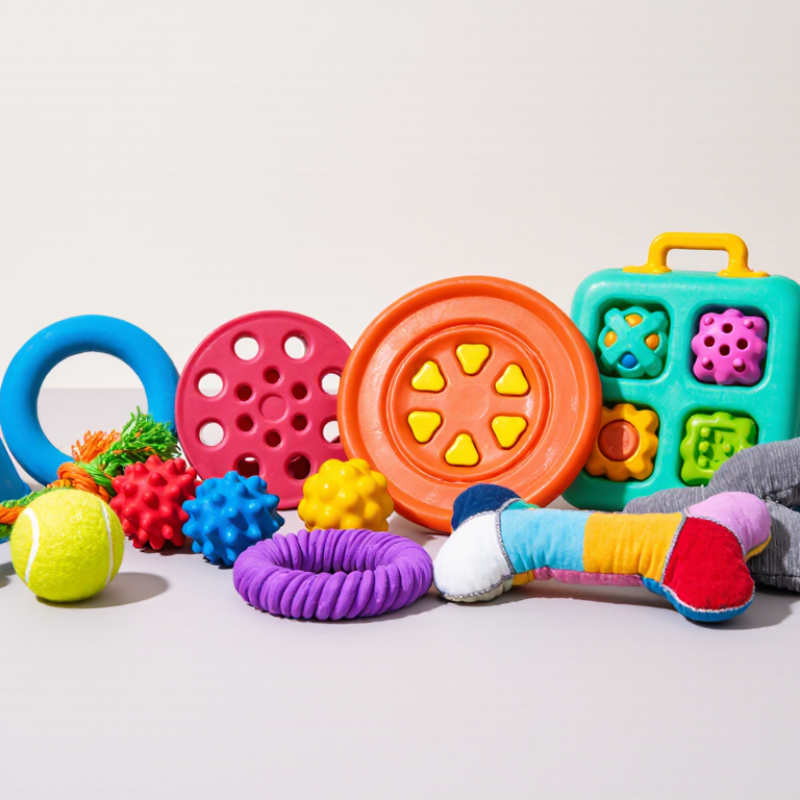
Table of Contents
[Hide]
Understanding Play-On Dog Toys and Their Benefits
Understanding Play-On Dog Toys and Their Benefits
Play-on dog toys encourage movement, interaction, and problem-solving. They include tug toys, chase toys, treat puzzles, and durable fetch designs. Unlike passive objects, they invite dogs to make choices. This can support daily exercise, mental stimulation, and stronger human-animal bonding. The American Pet Products Association’s 2023–2024 National Pet Owners Survey estimated 65.1 million U.S. households owned a dog. FEDIAF’s 2024 Facts & Figures report also counted more than 139 million European pet-owning households. These figures show why thoughtful toy selection matters to global buyers.
In practice, one toy rarely suits every dog. A young herding dog may enjoy chasing, while an older dog may prefer gentle scent work. Veterinary welfare guidance consistently treats play, exercise, and cognitive engagement as important parts of responsible care. Still, “indestructible” is not a guarantee. A determined chewer can damage even a strong toy. Inspect seams, remove loose pieces, and supervise new play sessions. Never use a toy that becomes small enough to swallow.
Tips: Match the toy to your dog’s size, age, bite strength, and play style. Choose washable materials and visible safety information. Rotate toys weekly to reduce boredom. Watch body language. If your dog avoids a toy, the design may be wrong, not the dog.
10 Best Play On Dog Toys for Global Buyers? - Understanding Play-On Dog Toys and Their Benefits
| No. | Play-On Dog Toy Type | Main Play Function | Typical Material | Best Dog Profile | Engagement Level | Key Benefit | Important Buying Consideration |
|---|---|---|---|---|---|---|---|
| 1 | Treat-Dispensing Puzzle Toy | Releases small food rewards when the dog rolls, nudges, or manipulates the toy. | Food-grade rubber or durable plastic | Food-motivated dogs and dogs that need mental stimulation | ★★★★★ | Encourages problem-solving and can slow rapid eating. | Check that the difficulty is adjustable and that the opening can be cleaned thoroughly. |
| 2 | Automatic Rolling Ball | Moves unpredictably or changes direction to encourage chasing and pawing. | ABS plastic with a soft outer section | Small to medium dogs that enjoy chasing moving objects | ★★★★★ | Provides independent indoor activity when human play time is limited. | Confirm noise level, charging requirements, and suitability for the dog's mouth size. |
| 3 | Interactive Tug Toy | Supports supervised pulling, tugging, and short training sessions. | Braided cotton, fleece, or reinforced woven fabric | Dogs that enjoy interactive play with a handler | ★★★★★ | Builds engagement and can reinforce release and impulse-control cues. | Use only with supervision; remove the toy if loose fibers or damaged stitching appear. |
| 4 | Rubber Treat-Fill Toy | Holds dry food, soft treats, or frozen fillings for licking and chewing. | Natural rubber or thermoplastic rubber | Moderate chewers and dogs that enjoy licking | ★★★★☆ | Combines chewing, licking, and food enrichment in one durable design. | Select a size that cannot fit fully inside the dog's mouth and inspect regularly for cracks. |
| 5 | Snuffle Mat | Hides kibble or treats among fabric strips for nose-led searching. | Fleece strips with a rubber or textile backing | Dogs that enjoy scent work, foraging, or calmer indoor activities | ★★★★☆ | Encourages natural sniffing behavior and provides low-impact enrichment. | Choose machine-washable construction and supervise dogs that pull or swallow fabric. |
| 6 | Durable Fetch Disc | Supports retrieving, running, and controlled outdoor catching games. | Flexible rubber or soft, tear-resistant polymer | Active dogs that enjoy outdoor fetch | ★★★★☆ | Promotes aerobic exercise and handler-dog interaction. | Avoid rigid materials that may injure teeth; use an appropriate size and play on safe surfaces. |
| 7 | Squeaky Plush Toy | Produces sound when squeezed, shaken, or bitten during short play sessions. | Plush fabric, polyester filling, and an internal squeaker | Gentle chewers and dogs attracted to sound | ★★★☆☆ | Stimulates natural chase and capture behaviors while encouraging play. | Not recommended for destructive chewers; remove immediately if the squeaker or filling becomes exposed. |
| 8 | Floating Water Fetch Toy | Floats on water for retrieving at beaches, pools, or supervised outdoor areas. | Buoyant foam, rubber, or lightweight plastic | Water-loving dogs and dogs that enjoy retrieving | ★★★★☆ | Adds exercise and enrichment during warm-weather outdoor activities. | Use a highly visible color, rinse after use, and never treat the toy as a flotation device. |
| 9 | Slow-Feed Lick Mat | Spreads soft food across textured grooves for licking and gradual consumption. | Food-grade silicone or flexible rubber | Fast eaters and dogs that benefit from calming enrichment | ★★★☆☆ | May lengthen treat time and provide a quiet, low-impact activity. | Use dog-safe foods in suitable portions; clean grooves carefully after every use. |
| 10 | Motorized Chase Teaser | Moves a fabric lure or attachment to encourage chasing and pouncing. | Plastic housing, motorized mechanism, and fabric lure | Indoor dogs with strong chase instincts | ★★★★☆ | Offers active indoor play and can help reduce boredom. | Supervise use, keep fingers away from moving parts, and store the toy after play. |
Buyer guidance: Toy suitability depends on the dog's size, chewing strength, play style, and health condition. Always supervise play, inspect toys regularly, and replace any toy that is broken or shedding small parts.
Related Posts
-
10 Best Good Quality Dog Toys for Wholesale Buyers?
-
How to Choose Good Quality Dog Toys for Your Pet?
-
Top Selling Pet Dog Toys in China for Global Buyers?
-
2026 Best Active Dog Toys for Wholesale Buyers?
-
Unlocking Quality Suppliers for Best Play Dog Toys Proven Strategies for Global Buyers
-

7 Compelling Reasons Why Good Quality Dog Toys Are Essential for Pet Retailers